This article condenses a three-part series on what anthropology brings to brand strategy. For more depth and examples, you can read the full posts here: part 1, part 2, part 3.
I’m a cultural anthropologist who has been working outside of academia for nearly a decade, and this piece is based on my experiences and the work I have been doing for luxury and premium brands over the course of my career.
Anthropology doesn’t serve a single deliverable or a single phase of brand work; it’s a capability that supports a brand at every stage, from setting direction to fueling creative work to helping the brand understand its own identity, and its value compounds over time. Let me explain. 🤓
Here I’ll walk you through how anthropology supports a brand across many work streams and business priorities, using examples from my own projects — many of them for a brand I know very well by virtue of having worked on it for more than 5 years: Lexus. I worked on the agency side for Lexus, but often interacted with their in-house consumer insights team, where I also had a peek into the work they did and the way that research (and especially anthropology) could intervene to help find solutions to business challenges.
I’m certain there are many more ways than what I will outline, but these are the 3 pillars of how I see anthropology contributing to brands:
1. Understanding culture and audience
In terms of sheer project volume, this is the primary way I use anthropology to support brand work. Within an agency, the teams that are most impacted by this branch of work are strategy and media. Within a company, like Lexus or Marriott’s Luxury Group, it’s the marketing team, consumer insights, brand managers, and sometimes executive leadership that benefit most from what anthropology brings.
Within companies, when people hear I am an anthropologist, they sometimes think that I know everything about “culture” or that my role there is to be a pop culture expert. This could not be further from the truth. 😂 In reality, anthropology is more about providing a toolkit for analyzing culture and how human behaviour is impacted by and manifested through culture.
Understanding aspects of culture and deeply understanding one’s target audience or consumer are two different things, though they also always intersect. Because they are different, projects tend to have different methods, and outputs take different shapes.
Cultural and Semiotic Analysis
When working with a brand like Lexus, or other brands that carry a diverse portfolio of products (or properties like in the case of Marriott), there is always something being launched. For Lexus, this most often means new vehicle launches or redesigns, and therefore the strategy team would need to build a series of strategic outputs like the vehicle’s positioning, a comms and media strategy, and of course — the brief for the creatives to turn into ads and communications that go out into the world. In these cases, my role is to partner with strategy at the beginning, to help them build the cultural understanding they need, or to provide specific audience insights as they build their strategies.
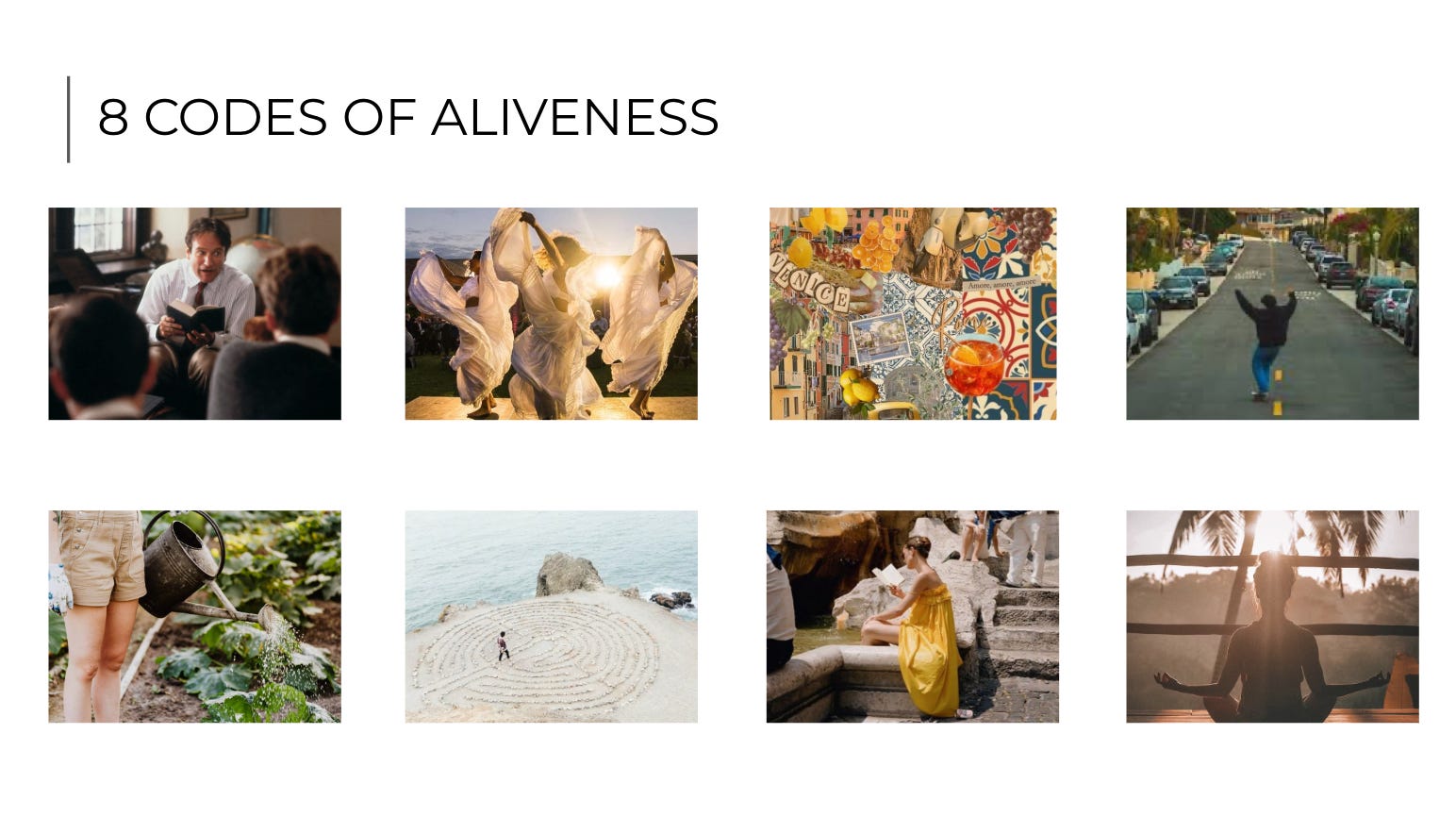
For example, when Lexus decided to launch the RZ, their first electric vehicle, we needed to think about how to position it in a market where it wasn’t the only vehicle that was electric, and not even the only premium/luxury electric vehicle. We wanted to speak to the truth of the vehicle and communicate to the US market that what distinguishes the RZ from competitors is the attention the engineers paid to creating a sense of “aliveness” while driving the RZ. To help get the strategic planners ideating for Lexus’s consumer research events and eventually for writing the brief, I did a semiotic analysis of the concept of aliveness. The analysis revealed 8 codes that then became the inspiration, both verbally and visually, for the team to write three positioning territories. These codes were mapped out on a semiotic square and developed in full, with examples from brands and culture, and included imagery and language.
Ethnographic and Qualitative Research
At other times, the type of knowledge needed to build a brand (or vehicle) strategy is deeper insight into the brand’s audience or target customers. It is not just the agency-side strategy team that this kind of anthropological work supports; there are also many instances in which the client marketing team, consumer insights team, brand managers, or executive leadership need a qualitative study to support some of their workstreams or key business decisions.
A few years ago I was asked to bring to life the target audience for mid-size luxury SUVs in the United States. This type of ask is common in my line of work, because it helps team members across the business understand who their business is for. I’ve found that without the kind of clarity that comes from being immersed in the real lives of real people, business decisions end up being made based on assumptions, even with the purest of intentions.
Different projects have different budgets, and qualitative research can often be done with even very small budgets, but for this mid-size luxury SUV consumer deep dive, there was enough budget for three researchers to spend a couple of days with three different families in three regions of the United States. One of the researchers was also a professional documentary filmmaker, and another researcher (me!) was also a professional photographer. We spent 2-3 days in each location — North Carolina, Texas, and California — with each family, conducting an ethnography and creating short films we called ethnodocs. We did interviews with each of the parents, observed family life, spent time traveling in their vehicles with them, attended their children’s extracurricular activities, went out to eat with them, and just generally got a taste of a typical week in their family life. One of the women also did 6 am bootcamp every morning before work, so you can bet that we were in that suburban parking lot at 5:54 am, ready to suffer alongside her. In true anthropological fashion.
At the end of the project, we had three short films, a research lookbook, and research presentations of various lengths to give everyone in the agency working on the project insight into the lives of the people they were creating ads and communications for.
Between the semiotic and cultural analyses on one end, and the ethnographic and qualitative research on the other, understanding culture and audience covers a wide range of methods — but the common thread is that this work happens before a brand decides what to say. It’s the foundation that positioning, briefs, and campaigns get built on, whether that foundation is a set of cultural codes, a family’s typical Tuesday, or a graph of family personality types.
2. Gathering input to evolve ideas
The second pillar is where anthropology’s role shifts from building understanding to testing it: taking a positioning, a name, or a brand’s own sense of itself, and checking it against how people actually think and live.
The impact of this type of work is aimed primarily at the creative team in an agency who are developing creative concepts, platforms, or campaigns. It is also particularly useful in helping executives on the client side to design their services or make important business decisions.
There are a lot of misconceptions about working in branding or advertising, and this is not the space wherein I will detail them all. But what I always explain to people I meet outside of the industry is that my job is just as much about impacting the brand or the client team as it is about impacting consumers. Sometimes the whole point of the work is to persuade the brand. It is not, like many people think, to convince people to buy more stuff. People are already choosing to travel and to book a hotel. How can the hotel design its services and programs so that it does a better job of being a place that people feel good in?
These might be some of my favorite projects. And that is because doing anthropological work that gathers input and supports idea creation allows me to very concretely see the impact of my work. It’s also fun for my research participants because they get to see that their thoughts and opinions matter. Clients also get the sense of security that they are making the right decision. Win-win-win.
In crude research terms, this type of work might be broadly labeled as ‘concept testing.’1 And concept testing is something that I help teams with — taking three finished name options into research, say, and coming back with a read on resonance, interpretation, and fit with the brand. But more often than that, I am brought in during the ever-evolving ideation phase to help teams as they continue to develop the strategic ideas, the creative platform, or even entire service platforms (like loyalty programs or rewards cards). The ideas that come to me are half-baked and in need of some input from real people!
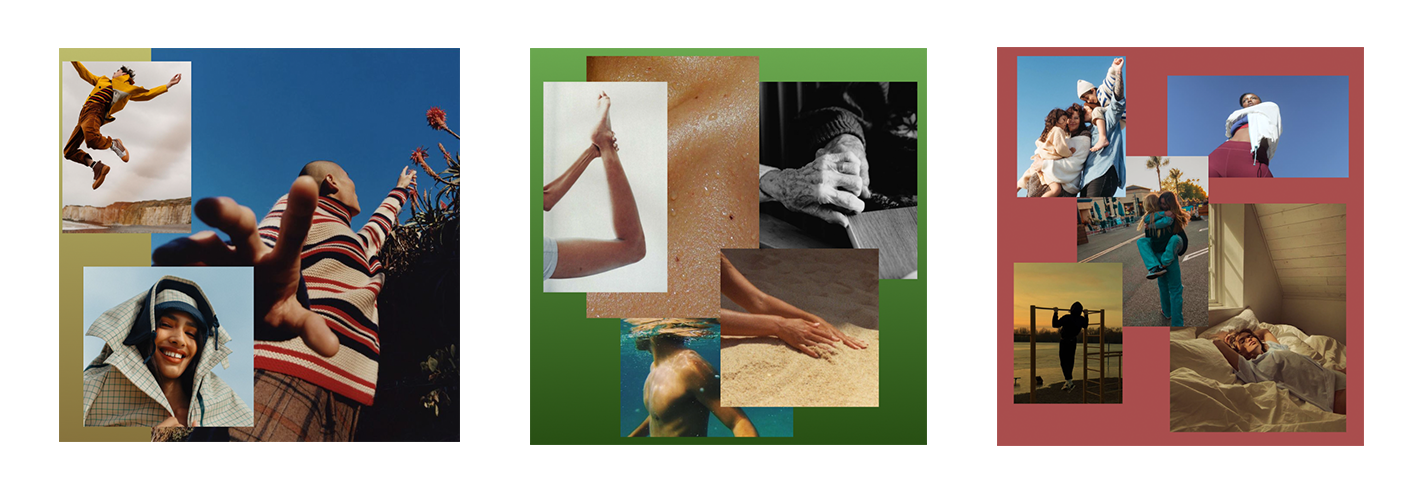
Here I’ll use the example of Vuori, because I’m obsessed with it as a brand (and have a closet full of their pieces) and because it was a favorite pitch (and win!). The pitch team asked me to take the three creative platform ideas in a very rough form into research to get some input from the target Vuori customer. I put together a digital qualitative research plan in which the research participants would review three concepts that included a manifesto, imagery, and “ad-like mockups” to help us understand what was working, what was resonating, and what wasn’t.
But because I’m an anthropologist rather than someone trained as a market researcher, I couldn’t leave it at just that. I wanted to use the time and space I had to get to know these research participants so as to bring ideas for even greater alignment of the brand to their actual lifestyle. Before I even showed the participants the creative platforms, I designed a few activities that helped me give the team (and ultimately the client) an elaborate picture of what the target consumer was like as a person, the lifestyle they lived, the things in their lives that made them feel they were living at their personal peak, and the impact that movement had on their lives.
By designing for two research goals — feedback AND deeper knowledge on the Vuori ideal customer — I was able to bring recommendations for enhancements and modifications that the creatives could actually act on.
3. Fueling creative execution
The third pillar is about what happens once the strategy exists and someone has to bring it to life. Projects within this pillar aim to help the creative team working on writing copy and bringing campaigns to life through TV, print, social media, OOH, and so on.
Projects that are scoped in support of agency creative teams are infrequent in coming across my desk. I’m not sure if it’s because creatives prefer to have their own ideas, or if calling in the local anthropologist just isn’t top of mind. Whatever the case, they are FUN. When the work is for creative execution, my mode is less about being analytical and more about being a collector of stories. As a result, it is often very easy to see the direct line from the research to the creative output, being that it is inspired by stories and examples shared by research participants.
A few years ago, for the release of the latest model of the Lexus LX, audience insights and the strategic brief led to a campaign called “No Moment Too Big.” The LX is a big vehicle. And there are no moments too pressured, no stakes too high, that the LX can’t help you handle. No moments are too big in the lives of high achievers for a vehicle of this size and stature.
Wanting to avoid overplayed stereotypes or a meaningless ad that fails to communicate something about real life to their target audience, the creative team asked me if I could do a bit of qualitative research with some members from my affluent consumer panel.2 They needed real stories of real high-stakes moments these successful people faced, along with an idea of some of the rituals that help them cope or succeed. I reached out to a few of my panel members who I knew fit the bill: overachievers in high positions (and who drive a luxury vehicle of course). I asked them to think ahead of time about some of their most high-pressure moments so that we could discuss them at length. I then pulled together what I had learned and presented it to the creative team, leaving them with a takeaway report that included collective insights and specific examples.
You can see the outcome of that work in the 30-second TV spot below:https://www.youtube-nocookie.com/embed/FixOyPy57aQ?rel=0&autoplay=0&showinfo=0&enablejsapi=0
One final example to bring this to a close (!!).
At the start, I said that the value of anthropology compounds over time. When a brand or agency regularly invests in the type of knowledge that cultural anthropology can provide, the returns on that investment continue to yield dividends because you aren’t buying an answer, but rather building a base of knowledge. A single market research study answers the question in front of you and then expires. As culture and context evolve, so does the single-moment answer a consumer will give you about your product or service. What looked like a trend was a blip. What looked like a blip was the beginning of a structural shift. It takes years of observation stacked on top of each other to tell the difference. The method of inquiry that an anthropologist employs, the depth and breadth of context explored that an anthropologist can’t help but inject into every study, is exactly what produces that ROI.
It’s what allowed a thought leadership study on Modern Affluent Parents to inform the creative execution for the upcoming December to Remember campaign that Lexus will launch this holiday season. For obvious reasons, I cannot disclose details about the strategy or creative of the campaign, but I can tell you that it was made possible as a direct result of an investment in foundational understanding of the lives of affluent American parents today. When designing that study, I did not focus on purchasing habits or brand consumption strictly. I prioritized understanding the value system that structures how they assign meaning to what they encounter as a parent, a consumer, an individual with hopes and dreams.
When I discovered that the team was in need of something fresh and insightful to inspire their work, I knew I could help them get to the answer, and I knew it was because the investment had been made long before the outcome was visible.